

Yesterday, the 27th of August 2021, was Wear It Purple Day. Wear It Purple Day is about raising awareness of the challenges faced by young LGBTQIA+ individuals in our communities. It’s about creating safety for young people to express who they are and supporting them to be their authentic selves in everything they do. By wearing something purple on Wear It Purple Day, you’re showing a visible sign of your allyship.
I’m a proud member of the LGBTQIA+ community, and yesterday I found myself reflecting on my own experiences. I’ve found myself in environments lacking safety and value for my identity as a gay man in the past. The impact this had on me wasn’t positive—I felt limited, and I couldn’t see a clear way forward. I felt like I didn’t belong and that my contributions had less value. From that experience, though, I recognise the importance of inclusive workplace practices which support employees with diverse identities. For this reason, days like Wear It Purple Day mean something more to me.
By taking the time in your organisation, your family, your school or your community to acknowledge causes relating to inclusion for diverse communities, you’re helping amplify a message of care and value for the experiences of others. By creating space for conversation and education around inclusivity, equity and diversity, you’re helping to shift the needle in the right direction.
Why is doing something visible important? The saying goes that “actions speak louder than words”. By visibly displaying your support, you’re helping pave the way for others to follow suit. You’re visually communicating that you’re an ally and that the space you occupy is safe for a diversity of people. This can be immensely beneficial in helping those who may not feel comfortable expressing their authentic selves within specific environments to open up.
Visible signifiers aren’t enough, though, and meaningful action needs to be strategically embedded throughout your organisation to create an inclusive culture. This needs to be embraced by senior leaders.
No matter what day of the year it is, we should all strive to create safe and inclusive spaces for people of all identities. If you’re looking for some inspiration for things you can do to help develop a culture of inclusivity and conversation around identity in your workplace, perhaps consider:
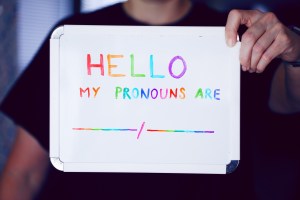
- Encouraging the use of pronouns in email signatures or on name badges
- Provide learning and development opportunities for your senior management to develop skills in holding and facilitating safe spaces for LGBTQIA+ people
- Showing your support on social media and in your communications in a way that reflects your organisation and its values on occasions like Wear It Purple Day
- Reflect on your policies and procedures and consult with LGBTQIA+ colleagues for their input—they’ll be able to point out things that you may not have a lens for if you don’t identify as LGBTQIA+ yourself
- Create space for conversation, and encourage a culture of respect, empathy and understanding. We’re all going to make mistakes as we learn to be more inclusive, and that’s OK. Acknowledging that you’re on a journey toward greater inclusivity, understanding and perspective helps conversations happen in a respectful way
- Consider introducing an Inclusivity Committee that meets monthly to develop and inform strategy around business activities, messaging and inclusive policy and practices. Create space for them to lead and give them time to talk at full company meetings (if they’re comfortable doing this) to provide insights and updates on their priorities. This also helps provide a leadership platform for diverse voices in your workplace
- Include diversity and inclusion objectives in your strategic planning. From this, create actionable steps and KPIs that move you toward a more inclusive culture. Keep the organisation updated on progress around these metrics—this could tie in nicely to the role and responsibility of an Inclusivity Committee
Purposefully create space for the inclusion and consultation of LGBTQIA+ voices in your decision-making processes. The lived experience of members of this community are fundamental to informing any of your efforts in this space.
To round out this post, I’d encourage you to reflect on what you or the organisation you work for are doing to create a culture inclusive of diverse identities. What role do you, personally, play in creating equity and inclusion? How could you elevate the conversation in your workplace?
We’ve all got a role to play and if you’re interested to know more about creating inclusive workspaces, I’d recommend the following resources and articles as a starting point:
- LGBTQIA+ Inclusion in the Workplace from McKinsey & Company
- Diversity Council of Australia
- A Managers Guide to LGBTI Workplace Inclusion from Western Sydney University
- A New LGBTQ Workforce Has Arrived—Inclusive Cultures Must Follow from Boston Consulting Group
- Out for Australia
- Wear It Purple Day
If you know of any other great resources that I should add to this list, please leave them in the comments below so that I can add them.


 Kane Moroney